 |
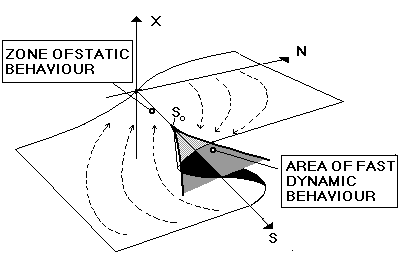
| A cusp. |
These can be modelled with dice effects and rules: they're semi-predictable, but uncontrollable at the conscious level, so you shouldn't be able to override them by, if you like, gamer decree.
The conscious effects are rather more interesting. Do we continue the attack? Dare we risk it? Many systems have global force breakpoints to handle this - once you pass army breakpoint your army flees, and that's it. There's an argument that the whole 'La Guarde recule!' reaction is just a larger version of the fear/fight cusp, and in fact there will come a point when it's all too much for your army and that's it, whatever you do.
But the interesting thing is this. If your game is set in a larger context, how much of that kind of thing do you find yourself doing anyway? If you know that if you retreat NOW you'll concede a 2 point loss in campaign terms, will you do it, rather than push on to break point and risk a 5 point loss? Will you resist the temptation to send a damaged unit back into the fray if you know it'll take it longer to recover afterwards as a result?
Context is everything. Discuss :D


